
Waterproof Roof Coating

What It Actually Does for Your Tiles
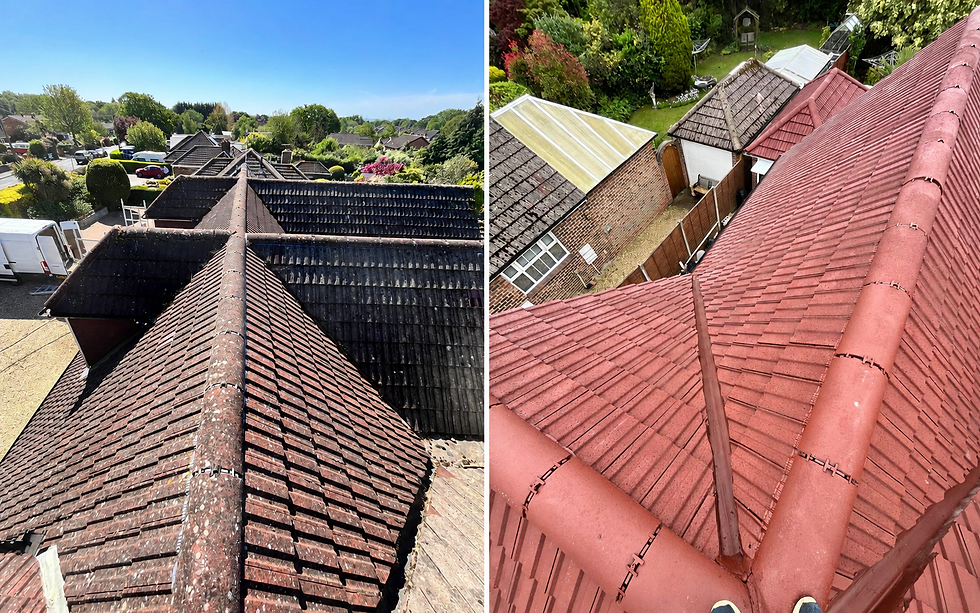
If you've been looking into a waterproof roof coating for your home, you've probably seen some big promises. Some make it sound like a magic shield that stops every leak. Well, the truth is a bit more nuanced, and once you understand it, you'll be in a much better position to decide whether a coating is right for your roof and to spot anyone overselling it.
In this guide, we'll explain what a roof coating does, what it doesn't do, why "breathable" matters more than "waterproof", and what to ask before you book. It's the same conversation we have with homeowners across Bournemouth, Poole and the rest of Dorset every week.
Article outline:
1. What Is a Waterproof Roof Coating?
A roof coating is a specialist protective finish applied to the outer surface of your roof tiles, usually in two coats. It improves the look of a tired roof, adds colour, and changes how the tile surface handles rain.
Here's the important bit. Most good quality coatings for tiled roofs aren't technically sold as "waterproof" at all. They're described as water repellent. For example, the manufacturer of ProPerla RENOTEC, the coating we use, describes it as a two-coat super-hydrophobic coloured roof coating that makes treated surfaces repel water.
It has been tested to recognised standards for water impermeability and water vapour permeability, which tells you it's designed to keep rain out of the tile surface while still letting moisture escape.
Waterproof vs water repellent: why the wording matters
It might sound like splitting hairs, but the difference is real:
Waterproof suggests a sealed, impermeable layer that nothing gets through, in either direction.
Water repellent means the surface sheds water. Rain beads up and runs off rather than soaking in.
Breathable means water vapour can still pass out of the tile, so moisture isn't trapped underneath.
For pitched roofs with clay or concrete tiles, you want the second and third, not a plastic-like seal. Why? Keep reading to find out.
2. How Your Roof Actually Keeps the Rain Out.
Before deciding what a coating can do, it helps to understand how a tiled roof works. A pitched roof isn't one waterproof layer. It's a system.
The tiles are the first line of defence. They shed most rainwater into the gutters. The underlay beneath the tiles is the backup.
Flashings, ridges, and valleys seal the joints and edges where water would otherwise find its way in. Even the underlay isn't fully waterproof. The British Board of Agrément [1] notes that an underlay isn't a total waterproof barrier; its main job is to act as a secondary barrier behind the tiles or slates.
The takeaway? Your roof stays dry because several parts work together. A coating protects one part of that system: the tiles themselves.
3. What a Waterproof Roof Coating Can Do for Your Tiles.
Used on the right roof, a good coating brings real benefits. According to ProPerla's product information for RENOTEC [2], keeping the tiles dry with the coating:
Helps extend the lifespan of the roof tiles.
Helps prevent loss of structural strength in tiles through weathering, frost damage and salt efflorescence.
Discourages the growth of moss, algae and lichens.
Resists UV degradation, so the colour holds up in the sun.
It also comes with a 10-year manufacturer's guarantee, and it can be used on concrete, clay and fibre cement tiles.
Why this matters on the Dorset coast
If you live near the sea, your tiles get a hard time. Damp air, salt and driving rain all take their toll, and porous tiles that stay wet for long periods are more vulnerable when temperatures drop. A water-repellent coating helps tiles dry faster after rain, which is exactly what you want on an exposed coastal roof in Sandbanks, Swanage or Weymouth.
The cosmetic bonus
Let's be honest, a lot of people come to us because their roof looks tired. Faded, stained concrete tiles can make an otherwise smart house look neglected. A coating gives the roof a fresh, even colour, and RENOTEC comes in a choice of colours, so you can refresh the original shade or go for something new.
4. What a Waterproof Roof Coating Can't Do.
This is where some companies get carried away, so we'd rather be upfront. A coating is not a repair, and it won't fix structural problems. In particular, it won't:
Stop an existing leak
Most leaks come from broken or slipped tiles, cracked ridge mortar, failed flashing or damaged underlay. Painting over the top doesn't fix any of those.
Hold broken tiles together
Replace cracked or missing tiles before applying any coating.
Replace a roof that's reached the end of its life
If the battens or underlay have failed, coating the tiles won't save it.
Suits every roof type
Very dense tiles and slate need a primer first according to the manufacturer, and some roofs simply aren't good candidates.
If your roof is leaking, the first step is to repair it. A coating can then protect the repaired roof going forward. Be wary of anyone who offers to coat a leaking roof without fixing the cause first.
5. Why a Breathable Roof Coating Matters More Than Waterproof.
Here's the part most homeowners never get told. A fully sealed, non-breathable coating can actually cause problems. Moisture always finds its way into a roof somehow, whether it's rain through gaps between tiles or condensation from inside. If that moisture can't escape, it gets trapped.
ProPerla explains that if a coating isn't breathable, moisture gets trapped under it [1] and will eventually lift the paint off the tiles. That's the peeling, flaking roof you sometimes see a few years after a cheap job. A breathable coating lets that moisture out while stopping rain from getting in.
So if someone sells you a "fully waterproof" roof paint, ask whether it's breathable. If they can't answer, that tells you something.
6. Is a Waterproof Roof Coating Right for Your Home?
A coating tends to be a good fit if:
Your tiles are concrete or clay and generally sound, just weathered or faded.
You live somewhere exposed, like the coast, and want the tiles to dry out faster.
You'd like the roof to look smarter without the cost and disruption of replacing it.
It's probably not the right answer, or not yet, if the roof is actively leaking, has lots of broken tiles, or has sagging or soft areas that suggest problems underneath. In those cases, repairs come first.
Questions to ask before you book a roof coating contractor
Is the coating breathable, and can you show me the manufacturer's information?
What guarantee comes with it, and who provides it?
Will you repair broken tiles and ridges before coating?
How will you clean the roof first, and how will you protect my gutters and garden?
Can I see photos of roofs you've coated, ideally a few years on?
A reputable roof coating installer will be happy to answer all of these. It's also worth checking whether your tile manufacturer has any guidance on coatings, especially if the roof is relatively new.
Conclusion
A waterproof roof coating, in the way most people mean it, is really about keeping water out of your tiles so they stay drier, stronger and cleaner for longer. Done properly, with a breathable product on a sound roof, it's a smart way to protect and refresh your home without replacing the roof.
It isn't a cure for leaks or a substitute for repairs. Get the roof sound first, choose a breathable coating with a proper manufacturer's guarantee, and ask plenty of questions. That's how you end up with a roof that looks great and keeps doing its job.
Frequently Asked Questions
Is every roof coating waterproof?
Quality coatings for tiled roofs are usually described as water repellent rather than fully waterproof. They make rain bead and run off the tile surface while staying breathable, so moisture inside the tile can still escape.
Will a waterproof roof coating stop my roof leaking?
No. Leaks usually come from broken tiles, failed flashing, cracked ridges or damaged underlay. These need repairing first. A coating protects the tiles afterwards but doesn't fix the cause of a leak.
Why does a roof coating need to be breathable?
Because moisture always gets into a roof somehow. A breathable coating lets it escape. A non-breathable one can trap it underneath, which can cause the coating to lift and peel off over time.
How long does a roof coating last?
It depends on the product and how well it's applied. The product we use comes with a 10-year manufacturer's guarantee when applied properly to a suitable roof.
Does a waterproof roof coating stop moss growing back?
It helps. Because the coated surface sheds water and dries faster, it's less welcoming for moss, algae and lichens. ProPerla says RENOTEC discourages this growth, though no roof is completely maintenance-free.
Get a Free, No-Obligation Roof Coating Quote in Dorset and Hampshire
If you'd like to know whether a protective roof coating is right for your home, we'd be happy to take a look. Veramut Ltd covers Bournemouth, Poole, Weymouth, Swanage, Dorchester, Sandbanks, Ringwood, Southampton and the wider Dorset and Hampshire area.
Get in touch for a free, no-obligation roof survey and quote:
SOURCES USED:


Comments