
Roof Repair vs Roof Replacement

Which Do You Need?
When something goes wrong with your roof, it is easy to assume the worst. A slipped tile becomes a failing structure. A damp patch on the ceiling becomes a disaster. And more than a few Dorset homeowners end up spending far more than they need to because they were told they needed a full replacement when a targeted roof repair would have done the job.
The truth is that most roofing problems are repairable. But some are not, and understanding the difference before you commit to any work could save you thousands of pounds. This guide sets out the signs that point clearly in each direction, and what to look for when making your decision.
Roof Repair vs Replacement article outline:
1. When Roof Repair Is the Right Answer.
Roof damage is not always as serious as it looks from the ground. Most problems that homeowners notice are localised, meaning the issue is confined to one specific area while the rest of the roof remains in perfectly good condition. In these cases, targeted roof repair is almost always the better option.
Isolated broken, slipped or missing tiles
Individual tile failure is normal over the lifetime of any pitched roof. Tiles crack under impact from debris, slip when fixing nails corrode, or lift at the edges when bedding mortar deteriorates. None of this means the roof as a whole is in trouble.
A single isolated leak at one clear entry point is almost always patchable and cost-effectively so.
The problem arises when leaks keep appearing in different spots.
For homeowners in Bournemouth, Poole and the wider coastal area, we carry out tile replacements and repairs as part of our roofing services Dorset, responding quickly and only replacing what actually needs replacing.
Ridge tile mortar failure
The mortar that beds and repoints ridge tiles along the apex of a roof has a finite lifespan. In coastal Dorset, salt air and the freeze-thaw cycles that come with wet winters accelerate that deterioration faster than in inland areas.
Cracked or crumbling mortar at the ridge is one of the most common roof problems we see across Bournemouth and Poole, and it does not mean the tiles below are failing. Ridge tile repointing or re-bedding restores the seal at the most exposed point of the roof. It is a targeted repair that addresses the real problem without disturbing anything that is still performing well.
A single area of water ingress
Water coming through the ceiling is alarming, but one defined damp patch or stain is usually the result of one localised failure: a cracked tile, failed flashing around a chimney or skylight, or a blocked and overflowing valley. Identifying and fixing the specific cause resolves the issue without any unnecessary wider intervention.
Roof issues often begin as minor concerns that can be swiftly and easily resolved if addressed promptly. Regular maintenance is essential, and catching a problem early almost always means it is repairable rather than structural.
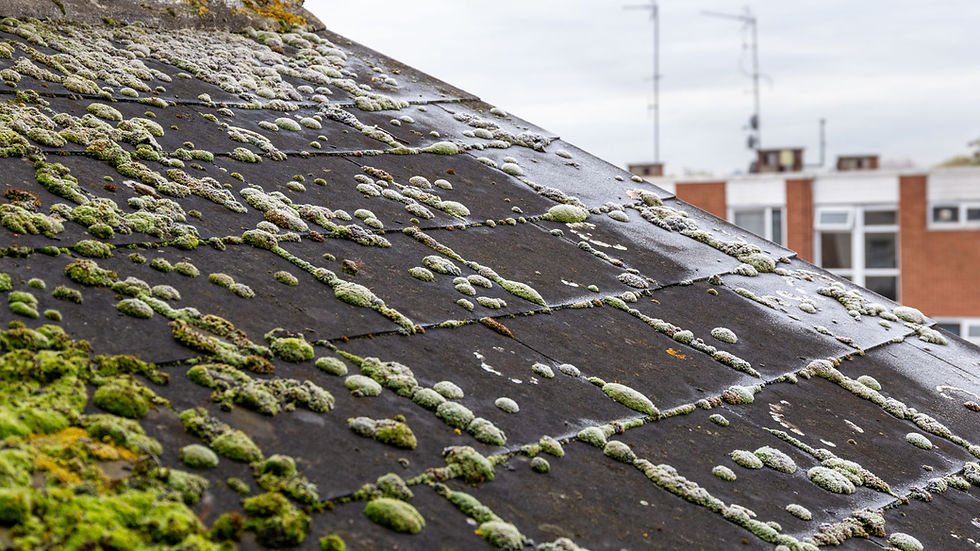
Moss and biological growth
Heavy moss on the roof surface is a maintenance issue, not a structural one. It is extremely common in Dorset's coastal climate where damp sea air and north-facing slopes create ideal growing conditions.
Professional cleaning removes moss completely, and the tile surface underneath is often in perfectly good condition once the growth is cleared. Moss that has been left for years can work into gaps and hold moisture against the tile surface, so it is worth addressing before it compounds. But moss alone is not a reason to replace a roof.
2. When Roof Replacement Becomes Necessary.
There are clear circumstances where repair stops being practical, and replacement is the only sensible course. Being honest about these is important, because applying a repair to a roof that is fundamentally failing only delays the inevitable while adding cost.
The roof is approaching or past its design life
Different roofing materials have different lifespans. Concrete tile roofs typically last 40 to 60 years, clay tiles can last 60 to 100 years, and natural slate can exceed 100 years with good maintenance. If a roof is approaching these upper limits and problems are starting to appear, repairs may be extending the life of a system that is already at its end.
For years, an ageing roof can look perfectly fine from the ground. Underneath, though, the underlay may be deteriorating, fixings corroding, and timbers quietly weakening. Age alone is not a reason to replace, but age combined with recurring problems usually is.
Damage is widespread rather than localised
A single problem area is almost always repairable. Widespread damage tells a different story. The rule of thumb most roofing contractors use is that once damage covers more than 25% of the roof area, repair stops being practical and replacement becomes the sounder call.
If tiles are slipping in several places at once, the fixings are likely corroding everywhere. If there are leaks in more than one room, the waterproof layer beneath has probably broken down across large areas. At this point, repairs become a game of catch-up that is very difficult to win.
The roof structure is compromised
A dip or bow in the roofline is a structural warning sign that goes beyond tile or mortar failure. It suggests the rafters, purlins or battens underneath are under stress or have begun to fail, often due to long-term water ingress that was not caught early enough.
This requires a full structural assessment, and in most cases, significant intervention that goes beyond surface repair. If daylight is visible through the underlay on a dry day, the felt has completely failed, and no surface repair can address this. The tiles need to come off entirely to allow proper remediation.
You have had multiple call-outs in a short period
This is one of the most reliable indicators that a roof is telling you something. One repair call-out is maintenance. Two or three in the same area over a couple of years suggest the underlying cause has not been resolved.
Three or more call-outs to different areas of the roof in a short period usually means the roof as a whole is deteriorating. If the roof is well within its design life and the problem is localised, repair. If it is past design life or you are on repair number three in as many years, replace.
3. Roof Repair vs Replacement - A Simple Rule of Thumb. The 30 Percent Test.
There is a widely used benchmark in the UK roofing industry that helps homeowners make the repair versus replacement decision. If the cost of a repair exceeds 30 percent of the cost of a full replacement, replacement becomes the financially sounder choice when considered over a ten-year horizon.
This is the threshold at which the maths tips toward replacement. Repeated repairs on an ageing roof, each requiring scaffolding, can accumulate quickly -- and scaffolding hire in the UK currently runs at approximately £800 to £1,500 per elevation per visit. Two or three repair visits over five years can cost nearly as much as replacement, while the roof underneath continues to age.
This test is not an exact science, but it provides a useful frame when comparing quotes. A professional survey will help you understand where your roof sits relative to this threshold.
4. The Smart Approach for Most Dorset Homes: Repair, Then Protect.
For the majority of Dorset properties we survey, the roof is repairable. Tiles are sound, ridge work needs attention, and there is moss that needs clearing. The right course of action in these cases is not replacement, and it is not simply patching the visible problem. It is a structured approach that addresses the current issue and protects against future ones.
Step one: Professional cleaning
Before any accurate assessment of tile condition can be made, the roof needs to be clean. Moss conceals tile damage, retains moisture, and prevents coating from bonding correctly. We clear the roof surface and gutters before anything else.
Step two: Targeted roof repair
With the surface clear, we carry out any necessary roof repair Dorset homeowners need: slipped tiles, ridge repointing, flashing work, valley repairs. Only what is needed. Every repair is explained and agreed before work begins, and we will always tell you honestly if we find something that changes the picture.
Step three: Protective roof coating
Once the roof is sound, an application of ProPerla RENOTEC roof coating extends its life significantly. The system is super-hydrophobic, highly breathable, and carries a 10-year manufacturer guarantee with a 25-year independently certified proven performance. It discourages moss regrowth, protects against frost and UV damage, and restores the appearance of weathered tiles. For many homes in Dorset, this three-stage process is far more cost-effective than replacement.
Roof Repair vs Replacement Conclusion
Most roofs in Dorset do not need replacing. They need honest, targeted roof repair carried out properly, and in many cases a protective coating that adds years to tiles that still have life in them. The key is getting an accurate assessment from someone who is not going to recommend the more expensive option regardless.
If your roof is showing signs of wear, moss growth, tile movement or water ingress, the sensible first step is a free survey. You will know within the hour whether you are looking at a repair, a clean and coat, or something more significant. There is no cost and no obligation.
Get in touch with Veramut Ltd for a free, no-obligation roof survey across Bournemouth, Poole, Weymouth, Swanage and Dorset. Call 07872 107 727 or email veramut.ltd@gmail.com. We will come to see your roof, give you an honest assessment, and provide a clear written quote before any work is agreed. |
Roof Repair vs Replacement Frequently Asked Questions
How do I know if my roof needs repairing or replacing?
The key factors are the age of the roof, whether the damage is localised or widespread, and how many times repairs have been needed in recent years. If the problem is in one area, the roof is within its expected lifespan, and the tiles are structurally sound, repair is almost always the right answer. If damage is widespread, the roof is old, or problems keep returning in different areas, replacement is worth considering. A professional survey is the most reliable way to get a definitive answer.
What are the signs that a roof needs urgent repair?
Signs that roof repair should not be delayed include water stains appearing on ceilings or walls, visible daylight in the loft on a dry day, tiles that are clearly slipped or missing, and moss or debris blocking gutters and valleys. These are not necessarily serious structural problems, but they will become more serious and more expensive if left unattended.
Does moss on the roof mean I need a new roof?
No. Moss is a maintenance issue, not a structural one. It is very common on Dorset properties where coastal damp creates ideal conditions for growth. Professional cleaning removes it effectively, and a protective coating applied afterwards will discourage regrowth for years. The tile surface underneath is often in good condition once the moss is cleared.
Is roof repair covered by home insurance?
Most standard home insurance policies cover sudden and unexpected damage, such as tiles displaced by a storm. They do not typically cover gradual wear and tear or maintenance issues such as moss growth or mortar failure. It is worth checking your specific policy wording and notifying your insurer promptly if damage follows a storm.
How long does a roof repair last?
A quality repair carried out by an experienced roofer should last for many years. Ridge repointing using modern mortar or a dry-ridge system, flashing replacement, and tile repairs all have long lifespans when done properly. The exception is repeated repairs to an ageing roof where the underlying tiles or structure are deteriorating -- in these cases, the next failure tends to appear elsewhere relatively quickly.
What is the difference between ridge repointing and re-bedding?
Repointing refers to renewing the mortar joints between ridge tiles where the existing mortar has cracked or crumbled. Re-bedding involves lifting the ridge tiles entirely, removing the old mortar bed, and re-setting the tiles in fresh mortar. Re-bedding is required when the tiles have shifted significantly, or the existing bed has failed completely. Both are repair jobs rather than replacement work.
Do I need planning permission for roof repair in Dorset?
Most like-for-like roof repairs do not require planning permission. If you are in a conservation area or the property is listed, different rules apply, and you should check with Dorset Council before any work begins. Your roofing contractor should be able to advise on whether Building Regulations notification is required for the specific scope of work.
About Veramut Ltd
Veramut Ltd is a specialist exterior renovation company based in Bournemouth with over 20 years of experience on Dorset properties. We carry out professional roof cleaning, moss removal, roof repairs and ProPerla RENOTEC roof coating across Bournemouth, Poole, Christchurch, Weymouth, Dorchester, Swanage, Sandbanks and surrounding coastal Dorset.


Comments