
When to Remove Moss From Roof Tiles

A Dorset Homeowner's Guide
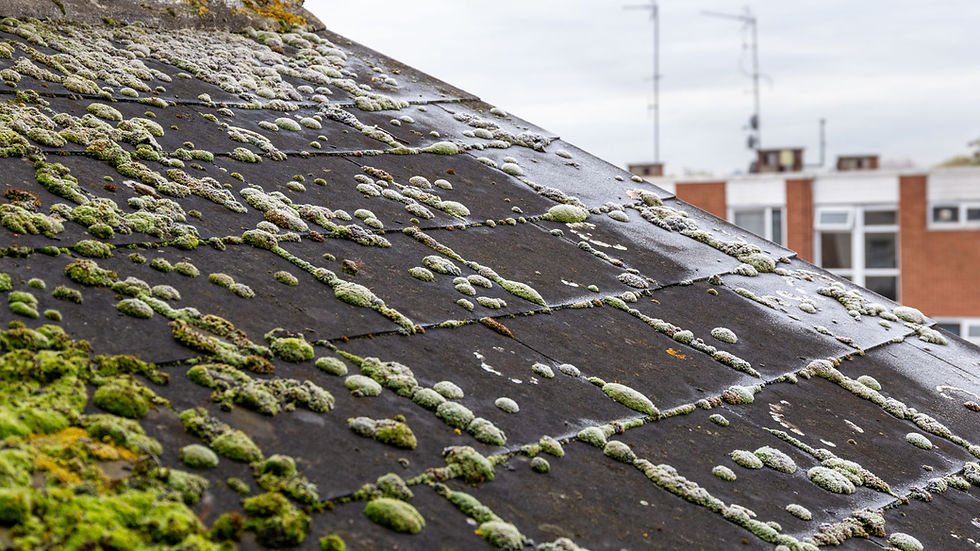
If you've spotted green clumps creeping across your tiles, you're probably wondering whether to remove moss from roof tiles now or wait until spring. For most homes in Dorset, the honest answer is autumn, roughly mid-September to the end of November. That window falls after the main bird nesting season and before the worst of the winter weather arrives.
Below, we'll walk you through why timing matters, which months to avoid, the one legal rule many homeowners have never heard of, and what a proper moss removal job actually involves. Essential info we'd tell you if we were standing on your drive looking up at the roof together.
When to Remove Moss From Roof Tiles. Article outline:
1. The Quick Answer: When to Remove Moss From Roof Tiles.
If you only have time to read one section of this article, make it this one. Here's how the year breaks down for moss removal on a typical Dorset roof:
Best time: mid-September to late November
Good second option: February, during a dry and frost-free spell, before birds start nesting.
Possible but weather-dependent: December to January, when there's a break in the rain and no frost.
Take extra care: March to August, which is the main nesting season. Work can still happen, but you need to check the roof for nests first.
Never: on frosty, icy, rainy or very windy days. Wet, slippery tiles and ladders are a bad mix.
The rest of this guide explains the reasoning, so you can decide what makes sense for your own roof.
2. Why the Time of Year Matters for Roof Moss Removal.
Moss isn't just cosmetic. It behaves a bit like a sponge sitting on your tiles, holding rainwater against the surface long after the rest of the roof has dried. Bits break off and wash into gutters and downpipes, which is usually the first place homeowners notice a problem. When gutters block, water spills over and can run down walls, which is how a roofing issue quietly turns into a damp issue.
Timing matters because you want the moss gone before the roof faces its toughest months. Clearing it in autumn means your gutters are running freely and your tiles can dry out properly through the wettest part of the year.
Dorset winters have been especially wet
This isn't just local grumbling about the weather. According to the Met Office's provisional figures for winter 2025/26, Dorset recorded its second wettest winter since records began in 1836, and southern England as a whole had its fourth wettest. The same report notes that climate change is linked to a trend towards wetter UK winters. For a roof that's already carrying moss, a long wet season means more water sitting on the tiles and more debris heading for the gutters.
Coastal homes get a double dose
If you live near the sea in Bournemouth, Poole, Swanage or Weymouth, you'll know how damp the air can feel, especially on north-facing roof slopes that barely see the sun in winter. In our experience, moss comes back fastest on these slopes, and it's most worth getting the timing right.
3. The Bird Nesting Season Rule.
This is the part that catches people out. Under the Wildlife and Countryside Act 1981, it's against the law to intentionally damage or destroy the nest of any wild bird while it's being built or in use. The RSPB explains the Act's protections here, and it describes March to September as the main nesting season.
The consequences are serious. The RSPCA states that the maximum penalty can be six months in prison and an unlimited fine, and that this can apply to each bird, nest or egg affected. The Sussex Wildlife Trust points out that the law applies to all wild birds, including gulls and pigeons that some people see as pests. That's worth knowing on the south coast, where gulls regularly nest on rooftops.
What this means when you're planning roof moss removal
If the work can't wait, make sure whoever does it checks the roof, eaves and gutters for active nests before starting.
If a nest is found, the work around it has to stop until the young have left. The RSPB's advice on birds in the roof is clear that you shouldn't start work if you know birds are nesting.
Bats are protected too. The same RSPB page says bat roosts are fully protected by law and that you should contact the Bat Conservation Trust if you need to carry out repairs where bats are present.
This is a big reason autumn works so well. By mid-September, most nesting has finished, and you've still got decent weather before winter properly sets in.
4. Best Months to Remove Moss From Roof Tiles in Dorset.
Here's a more detailed look at how each part of the year stacks up.
September, October and November: the sweet spot
Nesting activity has usually wound down, the weather tends to be milder than winter, and there are still plenty of dry days. Removing moss now means your roof and gutters go into winter clear. It also gives you time to fix anything the clean uncovers, like a slipped tile or cracked ridge mortar, before storms test it.
December to January: doable, but the weather decides
There's nothing wrong with removing moss in winter as long as conditions are safe. The catch is that dry, calm, frost-free days are harder to come by, so jobs can get pushed back. Frost is the big one to watch. A frosty roof is dangerous to work on, full stop.
February: a handy window
Late winter can be a good time if you missed the autumn slot. Birds haven't started nesting in earnest yet, and getting the roof clear now stops moss from spreading further through spring. Just pick a dry spell.
March to August: possible, with checks
Summer weather is lovely for roof work, which is why people naturally want to book it then. It's not off-limits, but it falls in the main nesting season, so a proper nest check beforehand is essential. If you find birds, expect a delay.
5. Signs Your Roof Needs Moss Removal Now, Not Next Year.
Sometimes the ideal month isn't the most important factor. If you notice any of these, it's worth getting someone to take a look sooner rather than later:
Thick, raised cushions of moss rather than a thin green film.
Moss sitting in the gutters or poking out of downpipes.
Gutters overflowing when it rains, even though they were cleared recently.
Green or dark streaks running down the walls below the gutter line.
Tiles that look lifted, slipped or out of line with their neighbours.
Damp patches on upstairs ceilings or signs of moisture in the loft.
Any of these on their own doesn't mean disaster. But together they suggest the moss has moved past the cosmetic stage and is starting to affect how water leaves your roof.

6. What Happens When Veramut Removes Moss From Your Roof.
If you'd like us to handle it, here's what a moss removal visit typically looks like:
Free site visit
We inspect the roof, gutters, and eaves, including a check for nesting birds, and talk you through what we find.
Careful moss removal
We remove moss by hand, working from the top of the roof downwards, without blasting the tiles.
Gutters and downpipes cleared
We remove all moss and debris from the gutters so water can drain properly again.
Roof check and repairs
With the moss gone, we can see the tiles properly. We can also sort slipped or broken tiles and tired ridge mortar at the same time.
Optional protective coating
For longer-lasting protection, we can apply ProPerla RENOTEC roof coating, which comes with a 10-year manufacturer guarantee.
You can see examples of our finished work on our projects page.
7. How to Keep Moss Off Your Roof Once It's Gone.
Once your roof is clear, a few simple habits help keep it that way:
Trim back overhanging branches so the roof gets more light and airflow.
Get gutters cleared every autumn, once the leaves have dropped.
Have a look at your roof from the ground once or twice a year. A pair of binoculars makes this much easier.
Book moss removal in early autumn, before growth gets heavy again.
Consider a protective roof coating if you want the tiles sealed and easier to keep clean.
When to Remove Moss From Roof Tiles. Summary
When it comes to deciding when to remove moss from roof tiles in Dorset, autumn is the clear winner for most homes. The nesting season has finished, the weather is still workable, and your roof goes into the wettest months with clean tiles and clear gutters. February is a solid backup.
Spring and summer are possible with the right checks, but they need more care.
If your roof already shows signs of heavy moss, blocked gutters or slipped tiles, don't wait for the perfect month. Getting it looked at now usually costs less than dealing with the knock-on problems later.
If your roof is looking green and you'd like it sorted before winter, we'd be happy to help. Veramut Ltd covers Bournemouth, Poole, Weymouth, Swanage, Dorchester, Sandbanks, Ringwood, Southampton and the wider Dorset and Hampshire area, and we're rated 10 out of 10 on Checkatrade.
Frequently Asked Questions
When is the best time to remove moss from a roof in the UK?
For most UK homes, early autumn is best, roughly mid-September to late October. The main bird nesting season has ended, and the roof can be cleared before winter rain and storms. February is a good second choice in a dry spell.
Can you remove moss from a roof in winter?
Yes, as long as the roof is dry, there's no frost or ice, and it isn't windy. The difficulty in winter is finding enough safe days, so jobs may need to be moved around the weather.
Is it illegal to clean a roof during bird nesting season?
Cleaning a roof isn't illegal in itself. What's illegal is intentionally damaging or destroying a wild bird's nest while it's being built or in use, under the Wildlife and Countryside Act 1981. If you plan roof work between March and September, check the roof for nests first.
When to remove moss from roof tiles if it's blocking the gutters?
As soon as is practical. Blocked gutters can overflow and send water down your walls, so it's better not to wait for autumn if moss is already causing drainage problems. Just make sure the roof is checked for nests if it's during nesting season.
Should I pressure wash moss off my roof?
It's generally not recommended. Roof tile manufacturer Wienerberger warns that high-pressure jet washers can damage the tile surface and force water into the gaps between tiles. Gentle manual removal followed by a roof treatment is the safer approach.
How often should moss be removed from a roof?
It depends on your roof. A shaded, north-facing roof near trees or the coast will need more frequent attention than an open, sunny one. A yearly ground inspection will tell you when moss starts building up again.
Comments